
Introduction
Ordering prescription glasses online can seem like an easy solution: browse dozens of frames from home, enter an existing prescription, place the order — and wait for a pair to arrive. For many people this works out fine, especially when prescription needs are simple and convenience matters. However, buying glasses without trying them on or having a professional do the measurements introduces uncertainties. This article walks through how online eyewear shopping differs from in-person purchases, what tends to go smoothly, where errors often occur, and how to approach the process with a balanced mindset.
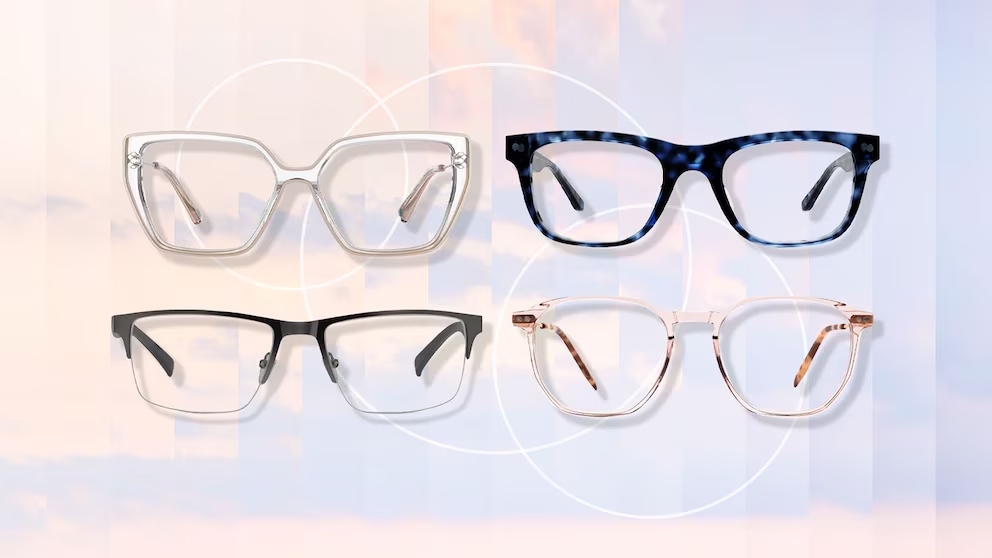
What works — where online glasses shine
- Wide selection of frames, styles, and lens options. Online retailers often carry many more frame shapes, colors, materials, and sizes than a typical local shop does. For someone who wants variety — perhaps a classic pair, a bold frame, a spare set, or multiple styles — the online environment tends to offer more choices than most physical stores.
- Convenient and flexible shopping. The entire process — selecting a frame, entering prescription details, placing an order — can happen remotely, no need to visit a store during business hours. That flexibility appeals to people with busy schedules or limited access to optical shops.
- Potential for lower price for simple prescriptions. Some online eyewear sellers are known for offering budget-conscious options when prescriptions are straightforward (single-vision, modest correction). For those cases, cost savings compared to some traditional shops can be a real advantage.
In short: online buying tends to work best when prescription needs are simple, and when the buyer values variety, convenience, or multiple pairs.
What doesn't always go smoothly
- Prescription or lens errors are not rare. Studies have found that a significant proportion of glasses ordered online arrive with incorrect prescription strength, improper lens alignment, or manufacturing errors. One investigation reported that nearly half of online orders tested failed either prescription accuracy or safety (impact-resistance) standards.
- Fitting and comfort are harder to guarantee. Without trying frames on in person, it’s difficult to be sure about how they’ll sit on the face — nose fit, ear-piece length, temple tightness, frame angle, and overall comfort can all be uncertain. Online tools (virtual try-ons) sometimes help, but often do not replace the clarity of an in-person fitting.
- Complex prescriptions carry higher risk. If lenses need to address astigmatism, strong correction, multifocal or progressive vision, or precise optical center alignment — these require accuracy and careful fitting. Online manufacturing and remote ordering often make these more vulnerable to error.
- Material quality, safety, and durability may vary. Some cheaper online frames or lenses may use lower-quality materials, weaker coatings, or less rigorous impact resistance standards. That may affect long-term durability, lens clarity, or safety under stress.
- Returns, adjustments, and follow-up are more burdensome. If prescription is wrong or fit is poor, returning or reordering can involve shipping delays, extra cost, and lack of in-person adjustment — unlike a local shop where frames can often be remounted or lenses reordered with relative ease.
Thus, while many people get a functional pair via online ordering, the process carries real uncertainty — especially when precision, comfort, or customization matter.
Who is more likely to do well buying glasses online — and who should be cautious
Online ordering tends to suit people who:
- Have a recent, accurate prescription — including a correct pupillary distance (PD) measurement. PD alignment is critical to lens performance and comfortable vision.
- Need simple, single-vision lenses with modest or standard correction (no strong prescription, no astigmatism or progressive requirements).
- Want multiple frames — for style, work, backup, or casual vs formal use; online options may make that more affordable and flexible.
- Are comfortable measuring or estimating frame fit (lens width, bridge, temple length) based on previous glasses, and accepting some trial-and-error if fit or comfort is imperfect.
- Understand and accept the risks: possibility of correction errors, fit issues, lens or frame quality variances, and potential hassle if returns or adjustments become necessary.
Caution is advised for people whose situation involves:
- Strong or complex prescriptions — astigmatism, multifocal lenses, high diopters, or other non-standard needs.
- High need for exact fit and comfort — long-term wear, sensitive facial features, or frequent use (e.g. work requiring long hours of vision correction).
- Dependence on lens quality, coatings, or safety features — e.g. for occupational use, safety glasses, eyewear for children, or protection against impact or UV exposure.
- Need for professional measurement, frequent adjustments, or personalized fitting services.
How to approach ordering glasses online with more care
If online purchase seems reasonable, following a cautious process helps reduce risk:
- Use a recent, valid prescription from a licensed eye-care professional — ensure the prescription includes pupillary distance.
- Compare frame measurements from an existing well-fitting pair (lens width, bridge width, temple length) when picking new frames online.
- Prefer single-vision lenses unless certain the online manufacturer can handle more complex needs and proper alignment.
- Read and understand the seller’s return, exchange, or remake policies — know how and when you can return or adjust if things go wrong.
- Upon receiving new glasses, test them carefully: check vision clarity, comfort, alignment; if discomfort, double-check prescription input and consider follow-up with an eye-care professional.
- Keep a backup pair (old glasses or an extra spare) until the new pair is confirmed comfortable and correct — avoids potential disruption if return or remake is needed.
Bottom line
Buying glasses online can be a useful, flexible solution — especially for people with basic vision correction needs and a preference for convenience and variety. But because eyeglasses involve personalized optics, careful fit, and safety considerations, the online route carries more uncertainty than in-person fittings. For simple use cases, online ordering may work out; for complex needs or high-precision demands, combining prescription from a professional with in-person fitting or using a trusted optical provider might lead to more reliable long-term results.
References
- https://www.webmd.com/eye-health/ordering-glasses-online/
- https://www.thoughtfulmisfit.com/blog/online-eyewear-the-advantages-and-disadvantages-of-buying-prescription-glasses-online
- https://www.optometristsclinic.com/b/the-dangers-of-buying-glasses-online/
- https://www.consumerreports.org/health/vision-eye-care/expert-advice-on-buying-eyeglasses-frames-lenses-coatings-a4033707605/
- https://www.optometrists.org/general-practice-optometry/optical/guide-to-optical-frames/should-i-buy-glasses-online/
- https://www.optometricsofchatsworth.com/blog/study-finds-safety-and-accuracy-issues-with-glasses-purchased-online
- https://mountainwesteyecare.com/why-you-should-avoid-buying-glasses-online/
- https://www.inneseyeclinic.com/blog/risk-purchasing-glasses-online/