

Clear Vision: An Overview of Myopia Laser Surgery in the USA
Individuals in the United States exploring options to reduce dependence on corrective lenses often encounter myopia laser surgery. This guide provides an objective examination of the procedure, synthesizing findings from recent clinical research and available data. The following sections will cover the prevalence of these surgeries, the technological and social factors contributing to their utilization, the mechanisms of common procedures like LASIK and PRK, associated costs, potential benefits, and the documented risks and complications.
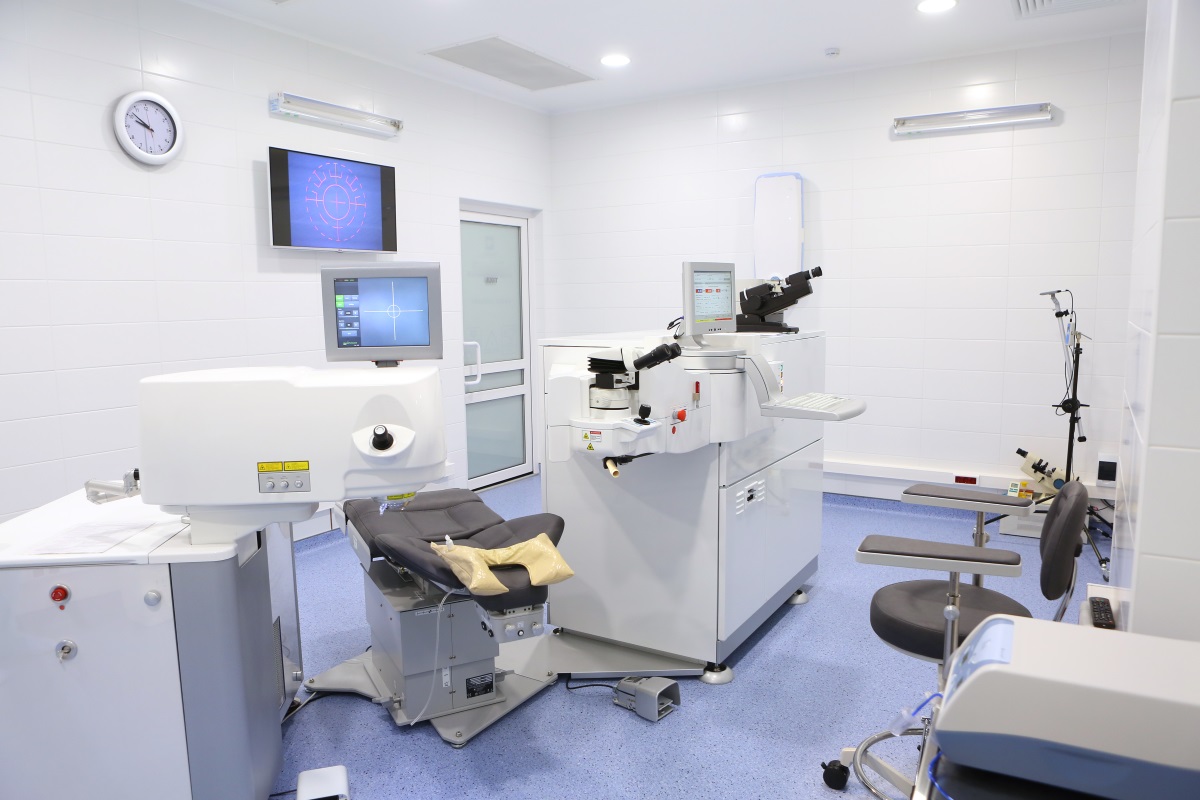
The Utilization of Myopia Laser Surgery in the USA
Refractive surgeries, including laser procedures for myopia, have become increasingly common in the United States. A review of literature from 2016 to 2025 indicates that LASIK remains a frequently performed kerato-refractive surgery globally . Data from the American Academy of Ophthalmology suggests the annual number of these procedures has been on a steady upward trajectory.
Factors Contributing to Surgical Volume
Several interrelated elements have contributed to the increased utilization of myopia laser surgery.
| Factor | Description |
|---|---|
| Technological Advancements | Innovations such as femtosecond lasers have been adopted to enhance the precision of corneal flap creation, contributing to safety profiles and recovery times . |
| Prevalence of Myopia | Research indicates a rising prevalence of myopia in North America, with projections estimating that nearly half of the population may be myopic by 2030 . This trend influences the number of individuals seeking corrective procedures. |
| Patient-Reported Outcomes | Patient satisfaction with LASIK remains high. One comprehensive review found that 92.6% of patients reported satisfaction with their surgery, and 99% stated they would recommend the procedure to a friend . |
Common Questions About Myopia Laser Surgery
For those considering myopia laser surgery, understanding the standard procedures, potential costs, and methods for selecting a provider is a necessary part of the decision-making process.
How Myopia Laser Surgery Works
Laser surgeries for myopia correct vision by reshaping the cornea, the clear front part of the eye, so that light focuses properly on the retina. The two most common methods are LASIK and PRK.
LASIK (Laser-Assisted In Situ Keratomileusis):
- Flap Creation: A thin, circular flap is created in the cornea's outer layer using a femtosecond laser or a microkeratome .
- Corneal Reshaping: An excimer laser is used to remove a precise amount of tissue from the underlying cornea to adjust its curvature .
- Flap Repositioning: The corneal flap is then carefully repositioned, where it adheres without the need for stitches.
PRK (Photorefractive Keratectomy):
- Epithelium Removal: Instead of creating a flap, the outer layer of the cornea (the epithelium) is removed. This layer regenerates over the following days .
- Corneal Reshaping: An excimer laser reshapes the underlying corneal tissue directly.
- Healing: A bandage contact lens is typically placed on the eye to protect it while the epithelium heals.
The Cost of Myopia Laser Surgery in the USA
The cost of myopia laser surgery is variable and depends on factors including the type of procedure, the geographic location of the practice, and the surgeon's experience. The figures below represent general estimates and can vary widely.
| Procedure Type | Estimated Cost Range (USD) |
|---|---|
| LASIK | $1,500 - $3,500 per eye |
| PRK | $1,200 - $3,000 per eye |
| Note: These are general estimates and not a guarantee of pricing. |
Considerations for Selecting a Provider
Individuals researching providers may consider the following aspects:
- Surgeon Credentials: Verification of board certification in ophthalmology and specific training in refractive surgery can be part of the selection process .
- Practice Reputation: Publicly available patient testimonials and a practice's surgical track record are factors some may review.
- Technology Used: Inquiring about the type and generation of laser technology a clinic employs is common, as advancements are continuously integrated .
Potential Benefits and Risks
As with any surgical procedure, myopia laser surgery presents both potential benefits and inherent risks.
Reported Benefits
- Improved Visual Acuity: A significant majority of patients achieve improved uncorrected distance visual acuity. Research shows that 88.3% of eyes treated for myopia with LASIK achieved 20/20 vision or better .
- Convenience: The primary goal for many is the reduced dependence on glasses or contact lenses for daily activities .
- Long-Term Considerations: While the upfront cost is significant, some individuals find it offsets the recurring expense of purchasing corrective lenses over time.
Potential Risks and Complications
Myopia laser surgeries are associated with potential complications, although they are generally infrequent . Common and rare side effects include:
- Dry Eye Disease (DED): This is one of the most frequently reported post-operative conditions. The creation of a corneal flap can temporarily disrupt corneal nerves, leading to decreased tear production and symptoms of dry eye .
- Epithelial-Related Complications: Issues related to the corneal epithelium can occur. The average incidence of epithelial defects is approximately 4.9% for LASIK and 3.3% for PRK . These can include conditions like epithelial ingrowth .
- Inflammatory Responses: Non-infectious inflammatory complications such as Diffuse Lamellar Keratitis (DLK) can occur after lamellar surgery. While most cases are responsive to treatment, some can have more severe outcomes .
- Flap Complications: Issues specific to LASIK can include flap striae (folds), dislocation, or debris at the interface .
- Refractive Errors: Under-correction or over-correction of the original myopia is possible, and some individuals may require an additional procedure or continued use of glasses for certain tasks . Sight-threatening complications are very rare, occurring in an estimated 0.07% of eyes .
Conclusion
Myopia laser surgery represents a widely utilized option for vision correction in the U.S., supported by a high rate of patient satisfaction and continuous technological evolution . The decision to undergo any refractive procedure is personal and requires a thorough evaluation of its potential benefits against its documented risks, including dry eye and other less common complications. Individuals considering surgery are advised to seek comprehensive consultations with qualified ophthalmologists, conduct personal research on provider credentials, and maintain realistic expectations about the outcomes, understanding that while most achieve significant improvement, perfect vision for every task cannot be guaranteed for all patients .
Data Sources
- https://pubmed.ncbi.nlm.nih.gov/40197080/
- https://journals.healio.com/doi/10.3928/1081597X-20250312-01
- https://pmc.ncbi.nlm.nih.gov/articles/PMC10443604/
- https://www.aao.org/eye-health/treatments/lasik
- https://www.weforum.org/stories/2024/10/children-shortsightedness-myopia-screens-indoors/
- https://misight.com/blog/rapid-rise-myopia-half-us-population-predicted-be-nearsighted-2030-due-increased-screen-time
- https://fox56.com/news/local/rapid-rise-in-myopia-half-of-us-population-predicted-to-be-nearsighted-by-2030-due-to-increased-screen-time
- https://www.brimhalleyecenter.com/lasik/lasik-eye-surgery-results/
- https://pubmed.ncbi.nlm.nih.gov/37614825/
- https://pmc.ncbi.nlm.nih.gov/articles/PMC10126282/
- https://pmc.ncbi.nlm.nih.gov/articles/PMC2966847/
- https://journals.lww.com/jcrs/fulltext/2011/02000/diffuse_lamellar_keratitis_8_years_after_lasik.31.aspx
- https://www.ocli.net/blog/lasik-by-the-numbers/
- https://www.mdpi.com/2077-0383/10/14/3067
- https://www.mdpi.com/2077-0383/12/11/3761
- https://www.aao.org/editors-choice/dry-eye-more-likely-to-develop-after-lasik-than-pr
- https://pmc.ncbi.nlm.nih.gov/articles/PMC12219200/
- https://eyewiki.org/Dry_Eyes_After_Laser_in_situ_Keratomileusis_%28LASIK%29
- https://www.nvisioncenters.com/laser-surgery/lasik-each-year/
- https://corsinilasereye.com/blog/lasik-safety/
- https://americanrefractivesurgerycouncil.org/laser-eye-surgery-lasik-success-rate/
Related Articles
Your Guide to Sleep Medicine: A Realistic Look at Seeing a Sleep Doctor in the U.S.
Mar 4, 2026 at 3:41 AM
Vaccination Clinics in Malaysia: A Practical Guide to Immunisation
Mar 9, 2026 at 7:10 AM
Revitalize Your Skin: The Ultimate Guide to Laser Skin Resurfacing
Jul 3, 2025 at 3:38 AM
Nutrition Planning Consultation: Concepts
Mar 12, 2026 at 9:14 AM
Laser Pigmentation Treatment: Mechanisms, Applications, and Objective Evaluation
Mar 20, 2026 at 5:54 AM
Health Check Consultation: Structure, Interpretation, and Preventive Contexts
Mar 19, 2026 at 8:34 AM
Wheelchairs — Design, Functionality, and Role in Mobility Support
Mar 18, 2026 at 9:53 AM
Understanding Hypertension — Mechanisms, Risks, and Long-Term Management
Mar 18, 2026 at 9:49 AM
Singapore Sleep Clinic: A Guide to Sleep Disorders and Clinical Evaluation
Mar 12, 2026 at 5:41 AM
Cervical Neck Pain: Definitions, Mechanisms, Clinical Context, and Evidence-Based Understanding
Mar 12, 2026 at 8:58 AM
Understanding Temporomandibular Joint Disorder Treatment: From Symptoms to Therapy
Mar 19, 2026 at 7:50 AM
Low Back Pain: Definition, Biological Mechanisms, Epidemiology, and Scientific Understanding
Mar 12, 2026 at 9:09 AM
Skin Treatment Singapore: Common Dermatological Treatments and Skin Care Approaches
Mar 12, 2026 at 5:57 AM
Arthritis: Classification, Mechanisms, and Clinical Perspectives
Mar 19, 2026 at 8:31 AM
Medical Monitors: Understanding Their Role, Function, and Context in Modern Healthcare
Mar 13, 2026 at 9:13 AM
Anti-Allergy Medications: Scientific Overview of Types, Mechanisms, and Medical Context
Mar 13, 2026 at 9:23 AM
Weight Loss Plan Consultation: Scientific Foundations, Mechanisms, and Public Health Context
Mar 12, 2026 at 9:21 AM
Cardiac Monitoring Devices : A Comprehensive Scientific Overview
Mar 20, 2026 at 5:38 AM
Sleep Clinic Guide: From Diagnosis to Treatment and Management
Mar 19, 2026 at 8:01 AM
Diabetes — Biological Mechanisms and Long-Term Health Implications
Mar 18, 2026 at 9:55 AM


This website only serves as an information collection platform and does not provide related services. All content provided on the website comes from third-party public sources.Always seek the advice of a qualified professional in relation to any specific problem or issue. The information provided on this site is provided "as it is" without warranty of any kind, either express or implied, including but not limited to the implied warranties of merchantability, fitness for a particular purpose, or non-infringement. The owners and operators of this site are not liable for any damages whatsoever arising out of or in connection with the use of this site or the information contained herein.