
Introduction — what cellulite is and why people ask about treatment
Cellulite is the dimpled, “orange-peel” texture that shows up most often on thighs, buttocks, and sometimes hips and abdomen. It is not a disease; it’s a common variation in how fat, connective tissue, and skin interact. Most adults—especially women—notice some degree of cellulite at some point. Questions about treatment come up because the appearance can bother people; the interest is usually cosmetic rather than medical.
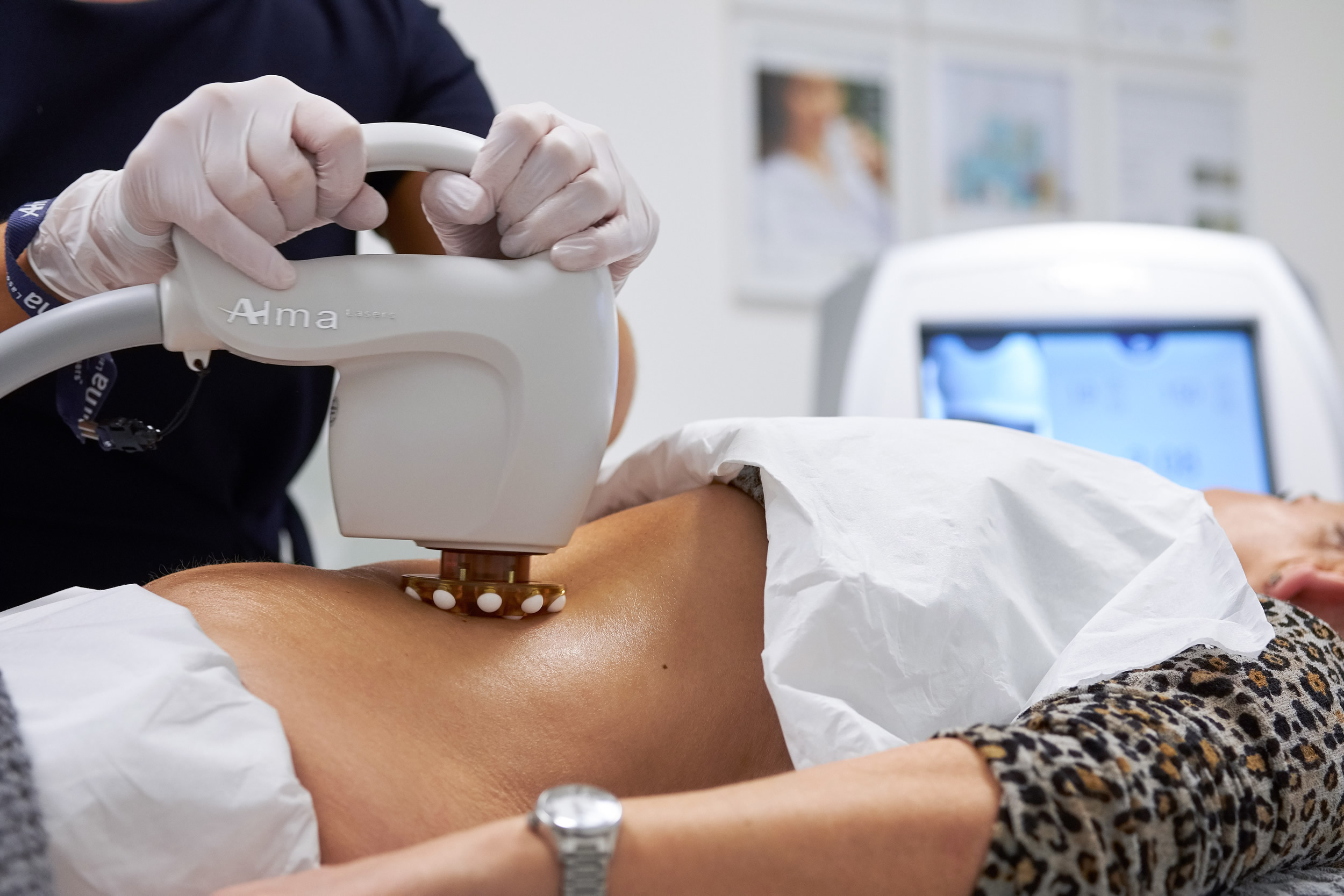
Part I — The main types of cellulite treatments
Treatments fall into three broad groups:
1.Topical products and at-home routines. These include creams, massage devices, retinol lotions, and lifestyle measures such as exercise and weight management. Some topical agents can slightly improve skin texture by thickening the skin or improving circulation, but effects tend to be modest and gradual.
2.Noninvasive energy-based procedures. These use heat, sound, or mechanical energy to change fat, stimulate collagen, or improve skin tone. Examples include radiofrequency (RF), ultrasound, and extracorporeal shockwave (acoustic wave) therapy. These approaches may reduce the visibility of cellulite for a period of time by tightening skin or remodeling tissue. Evidence varies between methods and between studies.
3.Minimally invasive or procedural options. These physically alter tissue structure. Subcision techniques (the best-known marketed example is Cellfina) cut or release the fibrous bands that pull the skin downward and create dimples. Other procedures combine small incisions with suction, laser, or targeted disruption beneath the skin. These tend to address the structural cause of dimpling and can show longer duration of effect in some studies.
Part II — How a typical treatment pathway works
- Consultation and assessment. A clinician examines the area, grades the cellulite, reviews medical history, and discusses realistic expectations. Photos and measurements may be taken for baseline comparison.
- Selecting the approach. The choice depends on the pattern and depth of dimpling, skin quality, and the person’s tolerance for downtime. For shallow dimples, topical and energy-based treatments may be suggested; for deeper puckers, structural approaches like subcision are often considered.
- Treatment sessions. Noninvasive methods typically require multiple sessions spaced over weeks. Minimally invasive procedures may be performed in one or a few office visits, sometimes with local anesthesia. Recovery time varies: some treatments allow immediate return to routine activities, while others produce soreness, bruising, or temporary swelling.
- Follow-up and maintenance. Many procedures show partial improvement that can wane over time; touch-up treatments or ongoing skin care may be part of a long-term plan. Clinicians usually schedule follow-ups to document results and manage any side effects.
Part III — Who is a suitable candidate, and what conditions affect results?
• Skin and fat characteristics. Thicker or more elastic skin may hide dimpling better than thin, lax skin. The depth and pattern of the cellulite dimples influence which method is most appropriate.
• Health factors. General health and wound-healing ability matter for invasive or minimally invasive options. Any active skin infection, bleeding disorder, or certain medications can change eligibility. Full disclosure of medical history helps clinicians choose safe options.
• Expectations. No current treatment uniformly eliminates cellulite for everyone. Some options reduce its appearance for months to years; others offer smaller, temporary changes. Understanding likely degrees of improvement helps set realistic goals.
Part IV — Longer-term considerations, risks, and what the science says
• Durability varies. Some interventions report sustained improvement for a year or longer in many patients; others show short-term changes that fade without continued sessions. Scientific reviews indicate no single therapy eliminates cellulite across all types and patients.
• Potential risks. Most adverse effects are temporary (bruising, soreness). Rare but more serious complications can occur with invasive or energy-based procedures; these are why a medical consultation and proper technique are important.
• Trends and research. Research continues into combined approaches (for example, combining mechanical subcision with energy delivery) and into agents that target tissue structure.
FAQs
Q: Do creams get rid of cellulite?
Topical creams can improve skin texture slightly, especially retinol formulations, but they are unlikely to produce major or permanent reduction in dimpling.
Q: Is there a single best treatment?
No single treatment works best for everyone. Choice depends on dimple depth, skin quality, tolerance for downtime, and evidence for the specific method.
Q: Are results permanent?
Some procedures report long-lasting improvements in many patients, but maintenance or repeat treatments may be needed over time. Individual outcomes differ.
Q: What are common side effects?
Typical effects include bruising, swelling, temporary tenderness, and occasional changes in pigmentation. Serious complications are uncommon but possible with improper technique.
Conclusion — takeaways before scheduling anything
Cellulite is common and has multiple treatment pathways, ranging from topical care and noninvasive energy devices to structural, minimally invasive procedures. Each option carries a balance of likely benefit, duration, side effects, and recovery. A careful consultation that covers grading of the cellulite, realistic outcomes, safety, and published evidence helps make an informed choice. The emphasis should be on understanding trade-offs rather than expecting a complete cure.
Sources
- https://www.merz.com/blog/news/fda-clearance-cellfina-system/?
- https://newsnetwork.mayoclinic.org/discussion/mayo-clinic-q-and-a-can-anything-help-cellulite/?
- https://pubmed.ncbi.nlm.nih.gov/30312363/
- https://pubmed.ncbi.nlm.nih.gov/39547984/
- https://www.aad.org/public/cosmetic/fat-removal/cellulite-treatments-what-really-works?
- https://pubmed.ncbi.nlm.nih.gov/23688206/
- https://www.accessdata.fda.gov/cdrh_docs/pdf19/K192185.pdf?
- https://www.mayoclinic.org/diseases-conditions/cellulite/diagnosis-treatment/drc-20354949?