
1. Introduction — what a dental crown is
Imagine a snug cap that slips over a damaged tooth to restore its shape and function — that is essentially what a dental crown does. Crowns fit over a prepared tooth and act like an outer shell that protects the remaining natural structure while restoring chewing surface and appearance.
2. Why a crown may be needed
A crown is commonly chosen when a tooth has lost substantial structural material from decay, a fracture, or after a root canal, where the remaining tooth walls may be thin. Crowns also serve as connectors in fixed bridges or as covers for teeth that need a cosmetic reshaping while maintaining strength. In clinical summaries, the main reasons listed are structural protection, restoration of chewing function, and aesthetic correction when a conservative restoration will not suffice.
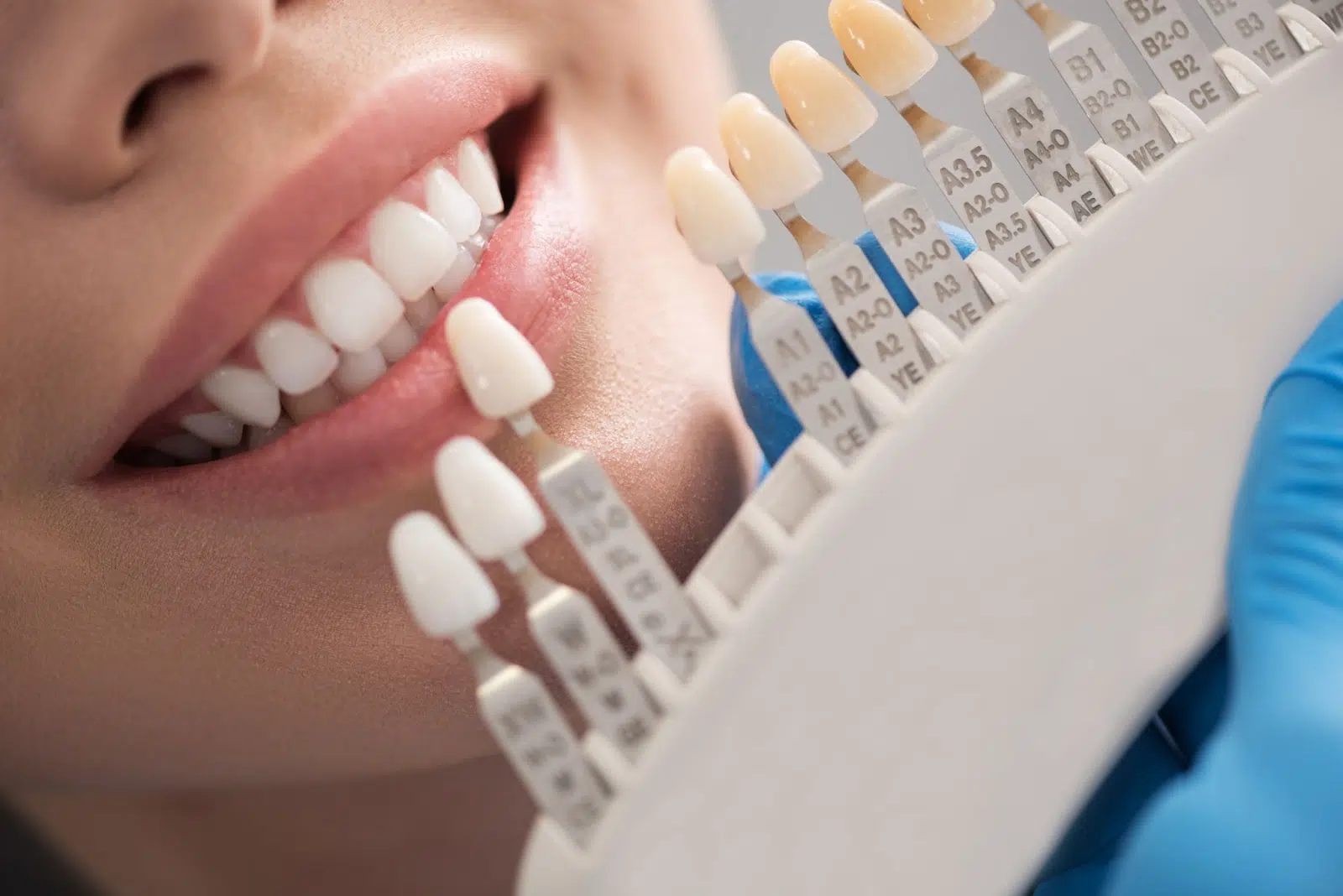
3. Types of crown materials and how they differ
Material choice is often presented as a balance among strength, wear behavior, translucency (how natural the tooth looks), and how the material interacts with adjacent teeth.
- Metal crowns (gold and other alloys): Longstanding option for posterior teeth where durability under heavy chewing force matters. Metals are typically the strongest but are visible when used on front teeth.
- Porcelain-fused-to-metal (PFM): Metal substructure with a ceramic outer layer; offers a mix of strength and improved appearance compared with all-metal solutions. Historical data and clinical reviews show continued use because of predictable performance.
- All-ceramic crowns (porcelain, lithium disilicate): Designed for good aesthetics, with modern ceramics reaching acceptable strength for many locations in the mouth. These materials are often chosen for visible front teeth.
- Zirconia (solid/monolithic): Noted for very high fracture resistance; used more often for posterior restorations where strength is prioritized while aiming for reasonable appearance. Some clinical series report multi-year survival rates comparable to PFM for certain applications.
Clinical reviews emphasize that differences in failure modes exist — for example, ceramic crowns can chip or fracture differently than metal-based crowns — and that tooth position, bite forces, and clinician technique all influence outcomes.
4. The crown placement process — step by step
A typical workflow presented in clinical and patient-facing descriptions usually includes these stages:
- Evaluation and imaging: Examination and X-rays to see root and bone health and to confirm the need for a full-coverage restoration.
- Tooth preparation: Removal of decay and shaping of the remaining tooth so the crown can fit with proper contour and margin fit. Some builds (core build-ups) are placed first if insufficient tooth structure remains.
- Impression or digital scan: Either conventional impressions or a digital scan is taken to capture the tooth geometry for lab fabrication.
- Temporary crown (if applicable): A provisional cap protects the prepared tooth while the final crown is made, except in workflows where same-day milling systems are used.
- Lab fabrication or in-office milling: Traditional lab-fabricated crowns are produced off-site; chairside systems (digital design + milling) can produce definitive crowns in a single visit in some settings.
- Final cementation and fit check: The crown is tried in, margins and bite are evaluated, and the restoration is permanently cemented when fit and occlusion are acceptable. Post-placement radiographs or photos may be taken.
These steps summarize the typical sequence; specific clinics may adapt them based on available technology and the clinical situation.
5. Care and practical precautions after crown placement
After a crown is placed, attention to basic oral hygiene and a few behavior points supports longer service life. The standard, widely reported points include:
- Daily plaque control: Regular brushing and interdental cleaning around the crown margin help prevent decay at the interface between crown and tooth. Maintaining gum health around the crown is also important.
- Be mindful of chewing habits: Avoid making habitual use of a crown as a tool for biting hard objects (for example, hard candies, ice, or non-food items), since mechanical overload can cause chipping or fracture.
- Parafunctional habits: For those who grind or clench teeth, protective measures such as an occlusal appliance are discussed in clinical literature because grinding increases mechanical stress on restorations.
- Regular dental follow-up: Routine professional examinations allow early detection of margin problems, recurrent decay, or loosening, which can be important in determining repair versus replacement.
These points appear repeatedly in patient education resources and clinical guidance as factors that influence crown longevity and oral health around a restoration.
6. Question & answer
Q: How long do crowns last?
A: Reported survival ranges vary by material, oral conditions, and study design. Many clinical and patient-oriented sources use ranges such as about 5–15 years as a general reference; well-maintained restorations often function longer, and multi-year follow-up studies exist for specific materials.
Q: Can crowns be made in a single visit?
A: Yes, digital design plus in-office milling systems allow single-visit fabrication in practices equipped for same-day workflows; other workflows use lab fabrication and a temporary crown across two visits.
Q: Are ceramic crowns weaker than metal ones?
A: Ceramic materials vary. Some ceramics are highly translucent but less fracture-resistant than metal; others (for example, full-contour zirconia) are designed for high strength. Clinical choice involves matching material properties to tooth position and functional demands.
Q: What are common causes of crown failure?
A: Common issues include marginal decay where the crown meets tooth, ceramic chipping or fracture, loosening because of cement failure, and problems related to surrounding gum or supporting bone. Many clinical reports break down failure modes by material type.
7. Conclusion
A dental crown is a widely used restorative option when a tooth needs structural reinforcement, aesthetic correction, or use as part of a bridge. Material choice, placement technique, and ongoing oral care all influence how well a crown performs over time. For specific clinical decisions and a tailored plan, a professional assessment that reviews the tooth condition, bite dynamics, and general oral health is the standard path used in dental practice.
Full source list
- https://www.broomfieldfamilydentistry.com/how-long-do-dental-crowns-last-a-complete-guide-to-dental-crown-lifespan-for-patients-in-broomfield/?
- https://my.clevelandclinic.org/health/body/24655-teeth?
- https://www.investopedia.com/ask/answers/113015/does-dental-insurance-cover-crowns.asp?
- https://pmc.ncbi.nlm.nih.gov/articles/PMC7584951/?
- https://pmc.ncbi.nlm.nih.gov/articles/PMC7584951/?
- https://www.greaterdentalhealth.com/post-operative-instructions-dental-crowns/?
- https://www.carecredit.com/well-u/health-wellness/dental-crown-cost-dental-crown-financing/?
- https://maplewooddental.com/what-are-cerec-same-day-crowns-and-how-do-they-work/?
- https://www.smilenorwalk.com/post/cerec-same-day-crowns-how-it-works?
- https://www.goodrx.com/conditions/dental-care/dental-crown-cost?srsltid=AfmBOordxoDnsvQKFxHux3O-a031JwRATPv7F84iRhLarp_XaGlsObS7
- https://pmc.ncbi.nlm.nih.gov/articles/PMC9663878/?
- https://www.ncbi.nlm.nih.gov/books/NBK304690/
- https://www.ada.org/resources/ada-library/oral-health-topics/materials-for-indirect-restorations?
- https://my.clevelandclinic.org/health/treatments/10923-dental-crowns?